
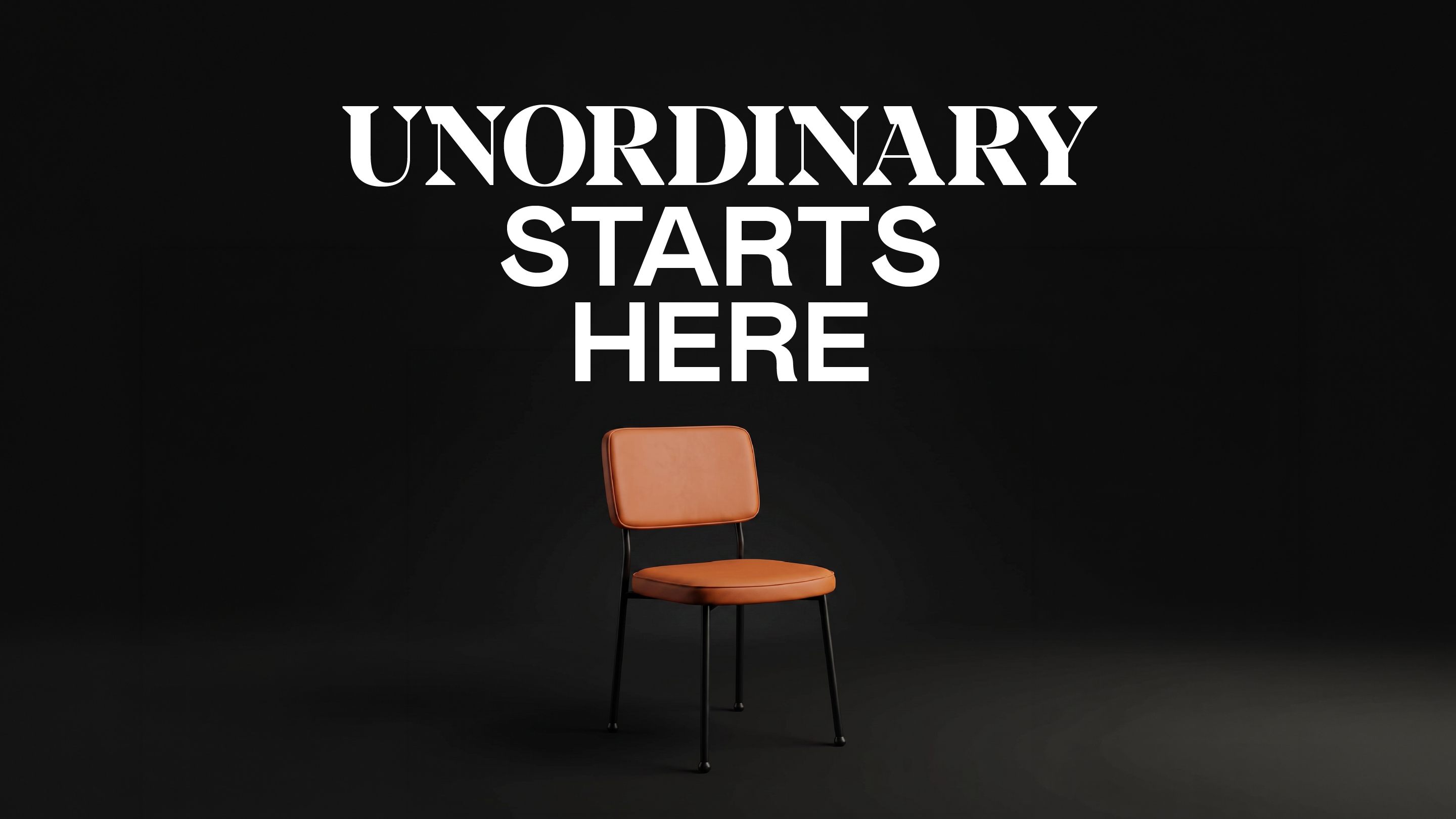

We talk a lot about Unordinary Ideas. Bold thinking. Distinctive brands. Work that stands apart. But most unordinary ideas don’t start in extraordinary places. They start in the everyday.
Because the role of a designer isn’t just to imagine what doesn’t exist. It’s to notice what already does - and question why people accept it.
The ordinary is invisible. Not because it’s unimportant, but because it’s familiar.
In branding, that friction is sometimes physical but mostly emotional.
Take wellness. A category built around helping people feel better has gradually become one of the most pressure-led spaces in branding. Many modern wellness and supplement brands now speak in the language of optimisation: improve your routine, track your progress, unlock your best self. Even self-care starts to feel like performance.
The intention is positive. But the outcome can quietly add pressure rather than remove it. And because this language has become so normalized, most people don’t question it - they just feel it.
That’s where the opportunity lies. Because the brands that truly stand apart aren’t the ones chasing originality for its own sake. They’re the ones that understand people more deeply than their competitors do.
The most powerful ideas come from spotting tensions others overlook. Questioning category norms people have stopped interrogating. Understanding not just what people do - but what they quietly put up with.
Great Ideas don’t come from ignoring the ordinary, but from understanding it.
Because when you understand what people feel, tolerate, and wish was better, you create brands that don’t just look different.
They are Unordinary.

