
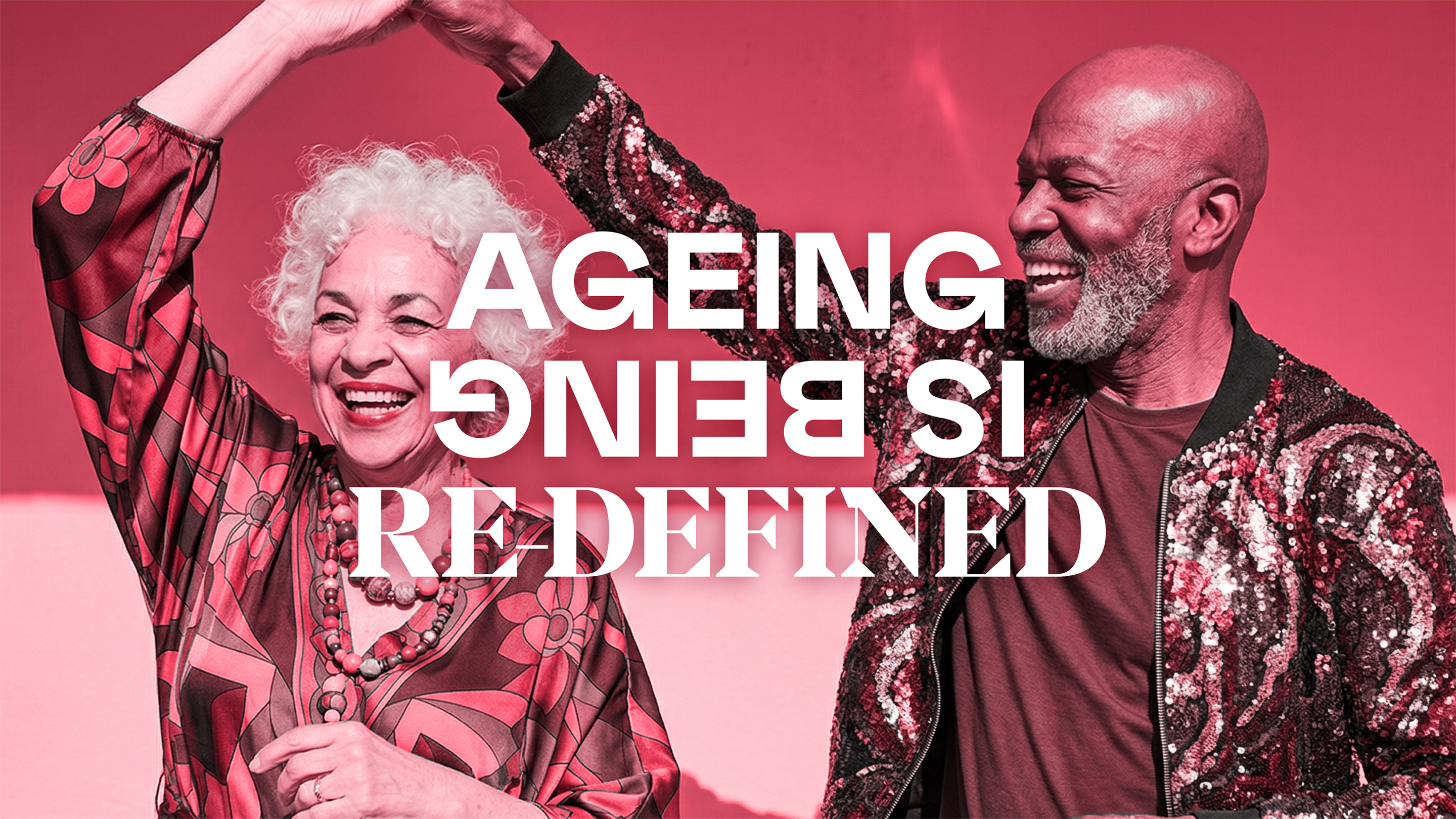
Marketing’s Blind Spot: The Wealthiest Generation

Written by: Jenn Szekely, President US

Why it Matters 

Consumers aged 60+, represents a critical, yet often overlooked, growth opportunity for marketers. With the global population of people aged 65+ projected to double to 1.5 billion by 2050, this cohort creates a massive addressable market. Moreover, Baby Boomers currently control the majority of wealth in the US (50–60%), and Gen X is set to inherit roughly $30 trillion over the next two decades. Despite this economic power, marketing to this demographic remains plagued by ageist stereotypes and lazy segmentation. Brands that shift their strategy from anti-aging narratives to celebrating the vitality and ambition of modern seniors stand to gain a significant competitive advantage. 

Takeaways 

  • Old age is being redefined:Increases in life expectancy and health mean traditional benchmarks have shifted; 60+ consumers are now more active, vital, and ambitious than previous generations. As major life milestones like childbirth and home-buying happen later, the lifestyles of older adults often mirror those of younger cohorts. 
  • Wealth is concentrated in older cohorts:The 60+ demographic is not just growing in number but in purchasing power. Boomers are the wealthiest generation in history, and wealth transfers to Gen X will further consolidate this economic influence. 
  • Marketing must ditch stereotypes:Current marketing often relies on bland or boring tropes of decline. Brands should focus on the dynamism, reinvention, and lifelong learning that define modern seniority. 
  • Aspirational representation wins:Forward-thinking brands in fashion (Prada, Juzui), hospitality (Casa Barbara), and sports (Nike) are succeeding by featuring older adults in aspirational, non-stereotypical roles. Successful strategies value accumulated wisdom and experience rather than trying to battle the clock. 


Not a day goes by without a comment being posted declaring 60 is the new 40, 70 is the new 50. Some argue that expressions like these are ageist and devalue a person’s age, personally, I see it as just a catchy way to communicate that our concept of “old age” has changed. And with that, the previous benchmarks for what a certain age signifies have changed. 

There’s no denying that 60 today is not what 60 was for previous generations. Life expectancy has increased for one. In 1950, the average life expectancy globally at birth was 46-48 years old, according to the UN. In 2020-2025, it has risen to 73-74 years old. More importantly, people aren’t just living longer lives; they’re living longer, healthier lives. That has led to a dramatic increase in the vitality and activity of many 60+ year olds today compared with previous generations. Actor Tom Cruise is in his 60s and, while filming Mission: Impossible – The Final Reckoning, he broke the Guinness World Record for the most burning parachute jumps by an individual. Meanwhile, actress Laura Dern, aged 58, made her catwalk debut for fashion designer Gabriela Hearst at Paris Fashion week in October 2025, strutting along with the rest of the – far younger – models in a gorgeous floral dress. If this isn’t proof that 60 has changed, I don’t know what is. 

Longer life means later milestones 

As life expectancy extends, it means people are also delaying major life milestones getting married, buying homes or having children. In 1970, the average age of a first-time mother was 21.4, but today many women are having children in their 30s and 40s. Of course, 60 is going to feel like 40 if your child is still in high school or college, compared with being a grandparent which would have been previous generations’ experience. 

In the past, 60+ was about winding down and declining. Today, older adults are defying expectations and rewriting the rules. They are also more ambitious, many reinventing themselves with a new career or business path after traditional retirement age. A significant majority of adults aged 65+ are actively engaged in lifelong learning, with enrolment in university extension programs and online courses surging. 

Where the wealth lies 

These changes in life expectancy and older people’s expectations have profound impacts on customer behavior. Not only are older people still shopping, viewing, interacting and starting new chapters. more of them are here to do those things. The number of people aged 65 and over is projected to double to more than 1.5 billion in 2050. 

This is a large, significant and powerful cohort. Brands need to pay attention because they are where the money sits. Baby Boomers are the wealthiest generation in history. In the US, they control over 50% of the wealth, which is 4x that of Millennials and more than 20x that of Gen Z. . But also don’t forget, Gen X started to turn 60 this year, and around $30 trillion in wealth will be transferred to them over the next 20 years. 

So where are Boomers and Gen X spending their money? For Boomers, healthcare remains to be significant, but did you know as part of their focus on health, they are leading the way on clean ingredients. More than half read the ingredients on nutrition labels and 43% avoid things like palm oils and high fructose corn syrup. This is important for brands to note, especially since Gen X and Boomers are also leading the spend in categories like CPG, general merchandise and QSR. Housing remains another big part of the spend between with roughly 30% of people’s spend across both groups,  however they are spending on housing is different. Gen Xers are still paying off their mortgages, where Boomers have mostly paid them off and are spending on this like upgrades and renovations. It is interesting to note that while luxury has been down the last several years, it has increased with Boomers and they are the highest spenders now, particularly when it comes to luxury experiences, like travel 

Change your view of older adults 

The challenge is that much of the marketing to 60+ consumers is full of ageist stereotypes and lazy segmentation. The difference between behaviors and attitudes of a 60-year-old and an 80-year-old are huge. Brands would never assume a 20-year-old behaved like a 40-year-old, but this is commonplace in the all-encompassing 60+ grouping. 

On top of that, brands treat the 60+ like they’ve given up. This is the Woodstock generation. Think about that next time you’re creating a campaign or building a brand targeting older shoppers. Challenge yourself not to be bland or boring. But we can’t just blame the brands, because these dated perceptions of older adults are perpetuated extensively, not least through the sources brands use for marketing. Search for images of seniors on Getty Images and you will see the negative bias and stereotypes everywhere. It is even worse and much more exaggerated when using AI models or generators. 

Brands leading the way 

But thankfully, some brands are thinking more imaginatively and smartly. Rather than diminishing this cohort, they are tapping into it and celebrating the positive truths of it. Interestingly, for an industry often lambasted for its focus on a very particular age and body type, the fashion industry has recognized this group has money to spend. Prada featured the actors Jeff Goldblum and Kyle MacLachlan for its fashion show in Milan for men’s fashion week in 2022. Suave and grey-haired the pair brought aspirational and mature majesty to the event. 

Meanwhile, at this year’s New York Fashion Week, Maye Musk—model and mother of Elon— closed Juzui’s show in silver glory (both her hair and her dress) at the age of 76. Musk also has previous experience helping brands wanting to demonstrate that older can be just as fabulous—she became the oldest ever face of CoverGirl in 2017 when she was 69-years-old. 

Casa Barbara is redefining hospitality and senior living in Nice, France. The brainchild of the Triaganos, the family who originally founded Club Med, its hotel and apartment brand is positioned to appeal to “new tribes of active seniors who aspire to live life to the fullest.”. It’s an example of a brand firmly tapping into the needs and lifestyle of affluent older age groups, without falling into tropes of their limited lives—rather, it celebrates their desire to connect and enjoy life to the full, regardless of age. 

And while Nike’s Just Do It ads have broken many a mold over the years, it really was ahead of the game with its first Just Do It ad which featured an 80-year-old runner. It reflected the reality of an older person, rather than relying on a stereotype. With a nice dose of humor added in for good luck. 

Age-value, brand-value 

The brands that will appeal most to older adults (and therefore their wallets) are those whose branding and marketing values older generations and challenge aging stereotypes. Getting older can be as much about reinvention and adding new opportunities and desires as opposed to stopping them. We can see that AARP has recognized this with its recent approach of moving away from primarily focusing on discounts and offering a rich tapestry of programs, services and opportunities, like Senior Planet, an initiative that offers in-person and online classes around the country centered around technology. 

Negativity associated with old age misses the mark. Brands aimed at women have often been guilty of this. Too many products and services have adopted an “anti-aging” message rather than elevating and celebrating age. True connection with older adults demands a strategic shift: one that moves beyond battling the clock to valuing the accumulated wisdom, unwavering confidence, and vibrant experiences that define maturity. And this cuts across genders and categories.  

Language is a huge lever brands can use to better engage with this audience. First, brands should avoid cliché and dated language when referring to products or services aimed at this group. For example, the word “senior” has negative connotations to many in this demographic, where “older adults” has become a much more preferred term. “Silver Surfers” has become just as patronizing. It’s not only the language of how we refer to this audience but also the language we use to market to them. For example, the food category can make very simple shifts that would have a big impact. Brands should be focusing on the benefits, not just the ingredients,  translating their nutritional components into tangible life improvements. For example, rather than using language like “high-fiber” on a package, it would be much more inclusive to have “aids in digestion”.  

But it is not just about language, this reframed ethos must infuse every touchpoint, from product innovation to brand identity and overall marketing, across all demographics and categories. The future belongs to brands that champion older adults’ dynamism, potential and enduring growth, not narratives of decline.